
top AEO Agencies

Top AEO Agencies Leading the Shift From Traditional SEO

That shift has created a new category of specialist: the AEO agency. These teams focus on entity signals, structured data, content that resolves intent cleanly, and brand presence in systems that summarise rather than simply list links.

What exactly is AEO, and how is it different from SEO?

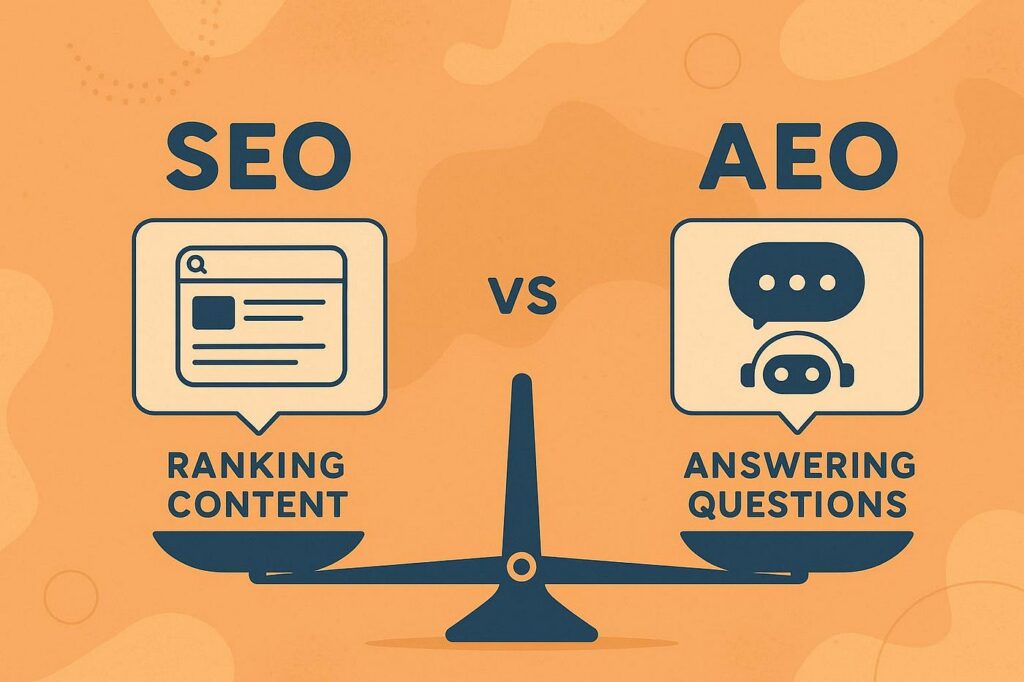
AEO, or Answer Engine Optimisation, is the practice of increasing the chance a brand is selected as the answer by AI-driven engines. Many companies evaluate top AEO agencies to help implement these strategies effectively. It overlaps with SEO, but the output target changes from “a top ten blue link” to “a cited snippet, a voice response, or a generative mention.”

It typically emphasises clear query resolution, source credibility, schema, internal knowledge organisation, and consistent entity information across the web.

Why are AEO agencies suddenly in demand?

They are in demand because search behaviour is fragmenting across ChatGPT-style tools, AI Overviews, Perplexity-like interfaces, and voice assistants. In those experiences, users often get one synthesised response, not ten choices.

That makes visibility more competitive and more reputation-driven. Brands want agencies that understand how models select, summarise, and cite sources.

Which AEO agencies are most associated with this shift right now?

These agencies are frequently referenced in AEO and AI-search conversations because they sit close to technical SEO, structured data, and “search as an answer” strategy.

Profound

They are known for work focused on visibility in AI search and on measuring how brands appear in generative responses. Their positioning tends to align with “GEO” and modern answer-focused discovery.

They are often discussed by teams that want reporting on AI mentions alongside traditional organic performance.

iPullRank

They are widely recognised for technical excellence and research-driven content strategy. Their approach tends to map well to AEO because it treats content as an information product, not just keywords.

They are often a fit where brands need deep audits, strong editorial systems, and serious internal alignment.

Seer Interactive

They are known for data-heavy marketing strategy across SEO and paid. That skill translates into AEO where experimentation, measurement, and stakeholder education matter.

They are often considered by teams that need cross-channel support while adapting to AI search changes.

Merkle

They are an enterprise digital marketing agency with strong technical and analytics depth. Their scale and systems-first approach can support AEO initiatives that touch large sites, complex governance, and global teams.

They are typically a fit for organisations that need process, compliance, and implementation support at scale.

Blue Array

They are known as an SEO consultancy and training partner, especially for in-house enablement. That matters in AEO because many brands need education, templates, and repeatable ways to ship “answer-ready” content.

They are often considered when a team wants capability-building, not only delivery.

top AEO agencies

What should a strong AEO agency actually do in practice?

They should translate “being the answer” into a concrete operating system. That usually includes technical foundations, content design for intent resolution, and brand/entity consistency across the web.

Common deliverables include schema strategy, content restructuring, expert-led briefs, knowledge-base design, digital PR for authority, and measurement frameworks that track citations and AI visibility.

How can they evaluate an AEO agency without getting fooled by buzzwords?

They should look for evidence of implementation and testing, not just new acronyms. A credible agency will explain what they change on the site, how they measure impact, and what trade-offs exist.

They should also be able to show how they handle entities, structured data, authorship signals, internal linking for understanding, and content formats that answer questions cleanly.

Which red flags suggest an agency is not ready for AEO?

They are probably not ready if they promise guaranteed inclusion in AI answers, rely only on generic “AI content,” or cannot explain how citations and source selection work. AEO is probabilistic and reputation-driven, so certainty is a warning sign.

They are also a poor fit if they ignore technical hygiene, structured data, or real editorial quality.

What is the simplest next step for brands considering an AEO agency?

They should start by identifying the queries where an answer engine result would meaningfully affect revenue or trust. Then they can ask agencies to propose a small pilot focused on those topics, with clear before-and-after measurement.

top AEO Agencies

If an agency cannot define a realistic pilot and what “success” looks like, they are unlikely to deliver in a search landscape shaped by answers rather than rankings. Click here to learn about why partnering with a perplexity AEO agency improves answer-based rankings.

FAQs (Frequently Asked Questions)

What is AEO and how does it differ from traditional SEO?

AEO, or Answer Engine Optimisation, focuses on increasing the likelihood that a brand is selected as the direct answer by AI-driven search engines, voice assistants, and generative AI results. Unlike traditional SEO which aims for ranking pages in Google’s top ten blue links, AEO targets cited snippets, voice responses, and generative mentions by emphasizing clear query resolution, source credibility, structured data (schema), internal knowledge organization, and consistent entity information across the web.

Why are AEO agencies becoming increasingly important in digital marketing?

AEO agencies are in high demand because search behavior is fragmenting across AI-powered platforms like ChatGPT-style tools, Perplexity-like interfaces, AI Overviews, and voice assistants. These platforms often provide users with a single synthesized answer instead of multiple links, making visibility more competitive and reputation-driven. Brands need agencies that understand how AI models select, summarize, and cite sources to effectively capture these answer engine opportunities.

Which agencies are recognized leaders in AEO and what distinguishes them?

Leading AEO agencies include Profound, iPullRank, Seer Interactive, Merkle, and Blue Array. Profound specializes in AI search visibility and measuring generative brand mentions; iPullRank excels in technical SEO and research-driven content strategy treating content as information products; Seer Interactive offers data-heavy marketing strategies integrating SEO and paid channels; Merkle provides enterprise-level technical and analytics support for complex global implementations; Blue Array focuses on SEO consultancy and training to build in-house capabilities for producing ‘answer-ready’ content.

What practical services should a strong AEO agency provide?

A competent AEO agency translates the goal of ‘being the answer’ into actionable strategies including technical foundations like structured data implementation (schema), content design aimed at intent resolution, brand/entity consistency across platforms, expert-led content briefs, knowledge base architecture, digital PR for authority building, and measurement frameworks that track citations and AI visibility. They ensure content formats cleanly answer questions and optimize internal linking to enhance understanding by AI systems.

How can brands evaluate if an agency is genuinely capable of delivering effective AEO results?

Brands should seek evidence of real implementation and testing rather than just buzzwords or acronyms. Credible agencies clearly explain site changes they make, how they measure impact through metrics like citation tracking and AI visibility scores, handle entities and structured data properly, maintain authorship signals, optimize internal linking for comprehension by AI models, and produce high-quality editorial content designed to answer queries precisely. Transparency about trade-offs involved is also crucial.

What warning signs indicate an agency might not be prepared for effective AEO work?

Red flags include promises of guaranteed inclusion in AI-generated answers (which is probabilistic), reliance solely on generic ‘AI content’ without strategic planning or quality control, inability to explain how citations or source selection function within AI systems, neglecting technical hygiene such as schema markup or site structure issues, and ignoring real editorial quality standards. Agencies lacking these competencies are unlikely to succeed in the evolving search landscape focused on answers rather than rankings.

AEO agencies

Why Partnering With a Perplexity AEO Agency Improves Answer-Based Rankings

A Perplexity AEO agency helps companies structure content, entities, and proof so Perplexity can confidently pull their information into direct answers. The result is fewer “maybe” impressions and more consistent inclusion in answer-based results where the user never has to open ten tabs.

What is “Perplexity AEO,” and why does it matter now?

Perplexity AEO is the practice of optimizing a brand’s content so it is selected, summarized, and cited inside Perplexity answers. Many businesses work with a perplexity aeo agency to structure their content and improve the chances of being referenced, because Perplexity frequently resolves queries by stitching together sources rather than presenting a list of blue links.

If they are not the cited source, they can lose mindshare even when they “rank” elsewhere. AEO shifts the goal from clicks alone to citations, summaries, and trusted inclusion.

How is Perplexity different from Google SEO?

Perplexity behaves like a research assistant that cites sources, not like a traditional search index that rewards pages for matching keywords. It often prefers pages that answer clearly, show evidence, and are easy to extract into a clean response.

That means a page can be “SEO good” but “AEO weak.” If their content is long, vague, or unstructured, Perplexity may cite someone else who explains the same point more directly.

Why do answer engines reward structure more than style?

Answer engines need content they can parse quickly into reliable chunks. They reward pages that define terms, present steps, and separate claims from evidence.

An AEO agency typically improves headings, section order, tables, and short answer blocks so Perplexity can lift the right lines without guessing. When their content is easy to quote, it becomes easier to cite.

What does a Perplexity AEO agency actually do?

They translate a brand’s expertise into “answer-ready” assets. That usually includes topic mapping, question selection, entity targeting, and rewriting pages so each one resolves a specific search intent cleanly.

They also audit citation patterns in Perplexity and adjust content to match what the engine already trusts. Over time, they build a library of pages that are designed to be summarized accurately.

How does an agency help them win more Perplexity citations?

They focus on citation triggers: clear claims, supporting data, authoritativeness signals, and internally consistent definitions. Perplexity tends to cite sources that appear stable and verifiable across multiple pages.

An agency will often add primary references, align terminology, and remove fluff that makes answers ambiguous. If they reduce contradiction and increase proof, Perplexity has more reason to choose them as a source.

Why is entity optimization so important for Perplexity answers?

Entities help Perplexity understand “who” and “what” a page is about. If their brand, products, founders, locations, and categories are inconsistently named, the engine can treat them as separate things.

AEO agencies standardize entity mentions, connect related pages, and clarify relationships like “Product X is a type of Y used for Z.” That improves retrieval accuracy and increases the odds their pages match the question being asked.

How does partnering improve content that already ranks?

A page can rank in SEO and still fail in AEO because it does not answer directly enough. Agencies rework content so the first lines resolve the question, then expand with detail.

They also add scannable elements like FAQs, definitions, and step lists that answer engines can reuse. The page stays human-readable, but it becomes far more “quotable” in an answer format.

AEO Agencies

What role do E-E-A-T and trust signals play in Perplexity AEO?

Perplexity cites sources that feel credible, not just optimized. Trust signals such as clear authorship, editorial standards, up-to-date information, and references can influence whether they are selected.

An agency typically tightens author bios, review dates, citations, and “about” information so the site reads like a reliable publication. If they look like the safest source, they get cited more often.

How does an AEO agency handle “zero-click” outcomes?

They plan for visibility without a click. In answer engines, the win is being mentioned, cited, and associated with the solution even when the user never visits the site.

Agencies often optimize for brand recall inside the answer by ensuring the brand name, product name, or unique framework is naturally included in the extractable text. That way, they benefit even when traffic is lower than traditional SEO.

What should they look for when choosing a Perplexity AEO agency?

They should look for an agency that measures citations and answer inclusion, not only rankings and sessions. They also need a team that understands information architecture, entity consistency, and how Perplexity sources answers.

The best partners show before-and-after examples inside Perplexity, have a process for prompt-based testing, and can explain how they reduce hallucination risk by improving on-page clarity and evidence.

How can they tell if the partnership is working?

They should see growth in Perplexity citations for target topics, more frequent inclusion in answer summaries, and better alignment between their pages and the questions users ask. They may also see higher-quality inbound leads because the answers filter for intent.

It helps to track a set of priority queries weekly, record cited URLs, and monitor which competitors appear. If their share of citations rises, the strategy is working.

Why does partnering beat trying to DIY AEO?

DIY efforts often stall because teams optimize for what they can see in analytics, not for what answer engines actually cite. Agencies bring repeatable testing, structured writing methods, and a focused approach to entities and evidence.

AEO Agencies

If they want to improve answer-based rankings faster and with fewer blind spots, partnering usually reduces trial and error. In a world where “being the answer” is the new top spot, that advantage compounds. Click here to learn about top AEO agencies leading the shift From traditional SEO.

FAQs (Frequently Asked Questions)

What is Perplexity AEO and why is it important for brands today?

Perplexity AEO (Answer Engine Optimization) is the practice of optimizing a brand’s content so it is selected, summarized, and cited within Perplexity’s AI-generated answers. It matters now because Perplexity often resolves queries by stitching together sources rather than listing blue links, making citation and trusted inclusion more valuable than traditional rankings or clicks.

How does Perplexity AEO differ from traditional Google SEO?

Unlike Google SEO, which rewards pages for keyword matching and ranking, Perplexity acts like a research assistant that cites sources providing clear, evidence-backed answers. Content that is long, vague, or unstructured may rank well in SEO but fail in AEO because Perplexity prefers direct, easy-to-quote responses.

Why do answer engines like Perplexity prioritize content structure over style?

Answer engines need content they can quickly parse into reliable chunks. They reward pages with clear definitions, step-by-step instructions, well-organized headings, tables, and distinct claims supported by evidence. Structured content makes it easier for Perplexity to extract accurate lines for direct answers.

What services does a Perplexity AEO agency provide to improve answer-based visibility?

A Perplexity AEO agency translates a brand’s expertise into ‘answer-ready’ assets by topic mapping, selecting relevant questions, targeting entities, and rewriting pages to resolve specific search intents clearly. They audit citation patterns in Perplexity and optimize content to align with trusted sources, building a library of pages designed for accurate summarization.

How do agencies help brands win more citations on Perplexity?

Agencies focus on citation triggers such as clear claims, supporting data, authoritative signals, and consistent definitions. They add primary references, standardize terminology, remove ambiguous content, and reduce contradictions to make the brand appear stable and verifiable — increasing the likelihood of being chosen as a cited source.

Why is entity optimization critical for success in Perplexity answers?

Entities help Perplexity understand exactly who and what a page is about. Inconsistent naming of brands, products, or locations can lead to misinterpretation. AEO agencies standardize entity mentions and clarify relationships (e.g., ‘Product X is a type of Y used for Z’), improving retrieval accuracy and matching user questions more effectively.